

On context switching, constant Slack, and finally putting my phone in another room
Once upon a time the lovely person that is now my wife was my girlfriend and she was furious with me. Why? Because I forgot to call her and when she tried to call me the line was busy for hours. Was I on the phone with some other girl? Hardly, I was deep in VAX assembly on the university mainframe, modem tied up, completely unreachable, and blissfully unaware that hours had passed. When I finally disconnected the modem so calls could get through, the phone rang and my angry girlfriend was in no mood to hear my excuses and I didn't even know what time it was.
Truthfully, I feel bad for developers today and everyone else who is trying to concentrate to get something productive done with all these distractions. The amount of noise these days is, well, distracting, to say the least. I have a couple thoughts on the topic.
Having held positions over the years from junior developer to VP, one of the things I don't think is talked about enough is context switching. Moving from one focus to another over a short period of time does not make for the best results, especially when doing anything that requires focus and undivided attention. Yeah, I've met folks who are pretty awesome at it but I don't recall any of them being really great software developers. Software development even with wonderful agentic assistants still needs understanding and focus. Context switching is not free and it costs real time to get back in focus to pick up where you left off no matter what the task. Even if you are trying to figure out what the heck Claude did to your code while you decided to play Wordle.
Based on the way I've experienced focus killing comes mainly in two forms. One is the organizational level and the second is the personal level.
The organizational level distractions
An organizational expectation that staff will constantly be monitoring and reacting to a communication channel is just plain bad for folks doing focused work. I've been in organizations where the unofficial performance review criteria was response time on Slack. But it's not Slack's or Teams' or Outlook's fault, they are just tools. A hammer doesn't build a bad house. The real culprit is a culture of constant availability, that nagging pressure for immediate replies, the unspoken rule that being slow to respond means you're not engaged, and the heavy mental toll of jumping between topics, threads, and tools all day long. This is an organizational culture problem, and it deserves more attention.
Pressure typically flows downhill. When leadership responds to Slack messages at 11pm and fires off emails on Sunday morning, it sends a signal, whether they intend it to or not, that the rest of the organization should be doing the same. Nobody wants to be the one who missed the message. So everyone stays plugged in, all the time, just in case. The result are employees that are perpetually half-present, technically available but never fully focused.
What makes this particularly hard to fix is that responsiveness feels productive. You're doing things. Messages are being answered. Fires are being put out. It has all the optics of a high-functioning team. What it doesn't have is deep work getting done, hard problems getting solved, or anyone having the uninterrupted time to actually think.
Establishing a culture that prioritizes productive time over instant reaction is not an easy thing to do. It requires leadership to not only acknowledge the problem but to model the behavior they want to see. Sending that Slack message at midnight and labeling it "no need to respond until tomorrow" is better than nothing, but it's still a midnight Slack message. The real version of this is leaders visibly blocking focus time on their calendars, openly not responding to non-urgent messages for hours at a time, and not rewarding the people who answer fastest.
Sounds like something we should have an immediate impromptu meeting about, right? Just kidding.
Some common sense measures can start to shift the culture without requiring a major transformation initiative. Establishing one or two no-meeting days per week gives people a fighting chance at sustained focus. Creating a clearly defined high-priority channel, think of it as the organizational equivalent of a fire alarm, that is only used for things that are actually urgent, trains people over time that that channel means drop everything, and everything else can wait. If every message is urgent, nothing is. Simple norms like response time expectations ("we aim to respond within a few hours, not a few minutes") go a long way toward defusing the anxiety that drives the always-on behavior in the first place.
None of this is rocket science. But like most culture problems, the hard part isn't knowing what to do, it's actually doing it, consistently, from the top down.
The personal level distractions
These days I know I'm having a good day when I forget about my phone. Sounds weird, right? But think about it, when was the last time you were so locked in on something that you looked up and two hours had passed? That's the feeling. That's what we're chasing. For me, the phone is the most reliable indicator of whether I'm actually in the zone or just pretending to be. If I'm checking it every fifteen minutes, I'm not focused. I'm just busy.
The honest truth is that most of what comes through on a phone during a workday is not urgent. It just feels urgent because it's new, and our brains are wired to treat new information like it might be important. That little dopamine hit when you unlock your phone and check the notification? That's not productivity. That's the same impulse that makes people refresh their email 40 times a day. It feels like staying on top of things. It's actually just noise.
I've had to do some deliberate work to get here. The first thing I did was have an honest conversation with myself about what actually requires an immediate response during working hours and what doesn't. The list was shorter than I expected. For me, the answer was family and close friends in a genuine emergency and on call alerts, that's it. Everything else can wait. So I set up an unwritten rule with my family and the people in my personal orbit: if it's important or an emergency, call. Everything else is a text. And texts, and I want to be really clear about this, are a passive form of communication. A text does not require an instant reply. It is not a phone call. It is not a tap on the shoulder. It is a message that will be there when I have a moment to get to it. Once the people in your life actually internalize that, the anxiety on both sides goes way down. Yes, I may be one of those people you hate that doesn't answer texts right away even though you know I'm online.
The mechanics of it matter too. Silence the phone. Not vibrate, silence. In my experience vibrate is just a quieter version of the same interruption. If you have to put it face down, or better yet, in a different room if you can manage it. The physical distance creates a small but real psychological barrier between you and the reflex to check. Out of sight, out of mind is a cliché because it works.
Notifications deserve their own reckoning. At some point I went through every app on my phone and asked a simple question, "Does this app need the ability to interrupt me?" The answer for most of them was no. Social media, news apps, games, half the things I had installed, none of them had any business pulling my attention away from what I was doing. I turned them all off. I check those things when I decide to check them, not when they decide to tell me something. That shift from reactive to intentional is small in practice but has a positive effect.
The silence-texts & set-boundaries approach isn't about being unreachable. It's about being selectively reachable. The people who need to get to you in a real emergency can still get to you. Everyone else gets you when you're ready, and you get to actually finish a thought.
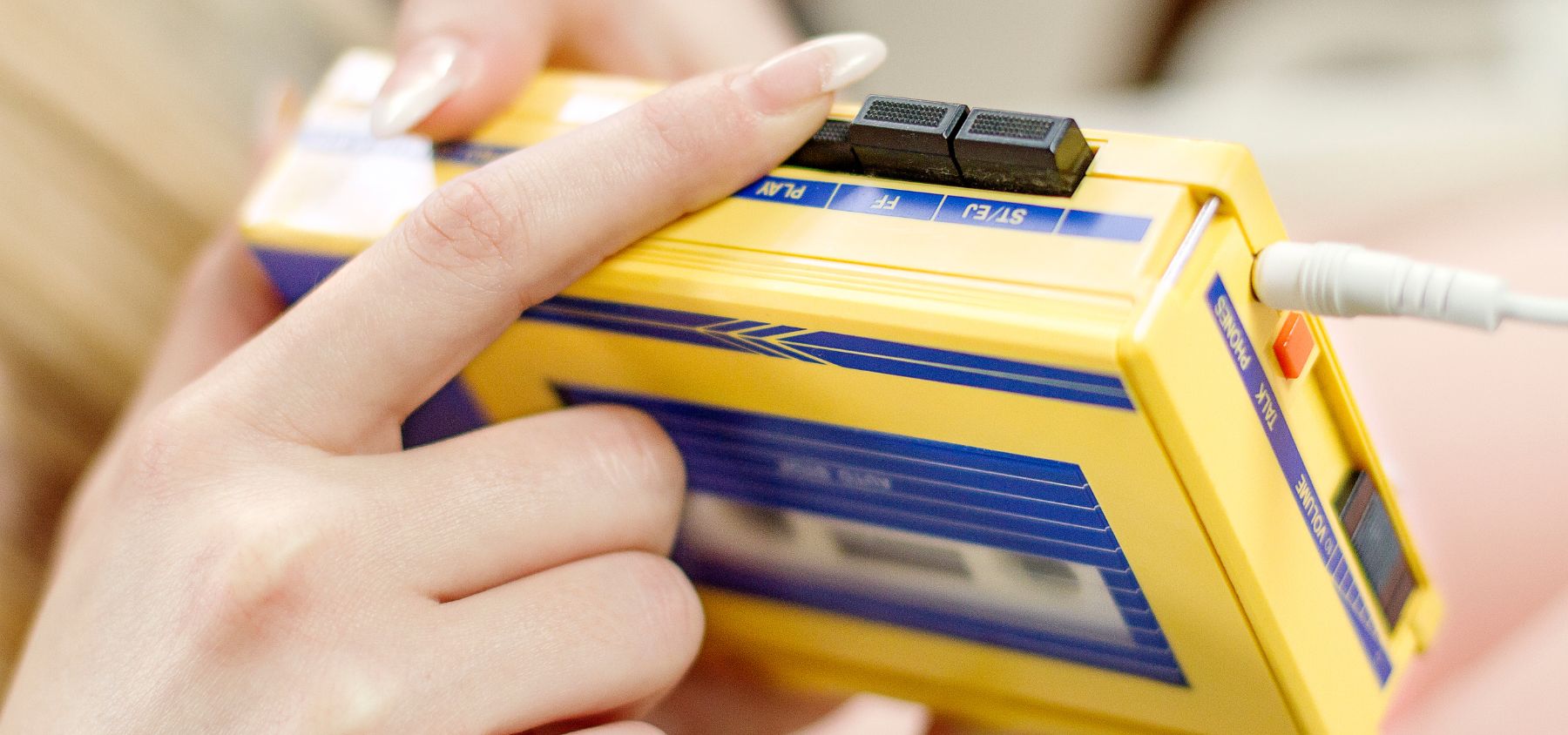
I totally admit that I find it harder than I used to get completely focused, in the zone, or whatever you want to call it, even putting aside focus time to get this post done is challenging. Maybe there are more distractions than ever or maybe I just need to acknowledge the issue, turn off my phone, get out my old Walkman, pop in an old Lou Reed cassette tape, put on the over the ear headphones, and kick out some code, or in this case some coherent thoughts.
